Table of Contents
- Introduction
- The Role of Statement Interiors in Modern Design
- Why Italian Marble is a Preferred Material
- Feature Walls and Book-Matching Techniques
- Flooring that Defines the Space
- Sculptural Staircases and Architectural Elements
- Bathrooms and Spa-Like Luxury Spaces
- Combining Marble with Other Materials
- Execution Efficiency for Large Projects
- Choosing the Right Marble Partner
- Conclusion
- FAQs
1. Introduction
In modern architecture, interiors are no longer just functional spaces—they are expressions of style, identity, and luxury. Architects today focus on creating “statement interiors” that leave a lasting impression. These spaces are designed to stand out through bold materials, unique patterns, and refined detailing.
Among the many materials available, Italian marble has become a favorite choice for architects aiming to achieve this level of sophistication. With its natural beauty and versatility, Imported Italian marble plays a crucial role in shaping high-end interior designs.
2. The Role of Statement Interiors in Modern Design
Statement interiors are designed to capture attention and define the character of a space. Whether it’s a luxury home, hotel lobby, or corporate office, these interiors focus on:
- Visual impact
- Unique design elements
- Premium material selection
- Seamless integration of textures and finishes
Architects use statement interiors to create memorable experiences for occupants and visitors. Materials like marble help achieve this by adding depth, texture, and elegance.
3. Why Italian Marble is a Preferred Material
Italian marble stands out due to its unmatched aesthetic appeal and natural variation. Each slab has unique patterns that cannot be replicated, making every installation one-of-a-kind.
Key advantages include:
- Elegant veining patterns
- Soft, luxurious color tones
- High polish and reflective surface
- Timeless design appeal
Subtle shades such as Italian grey marble in India are especially popular in contemporary interiors, as they offer a sophisticated yet understated look.
4. Feature Walls and Book-Matching Techniques
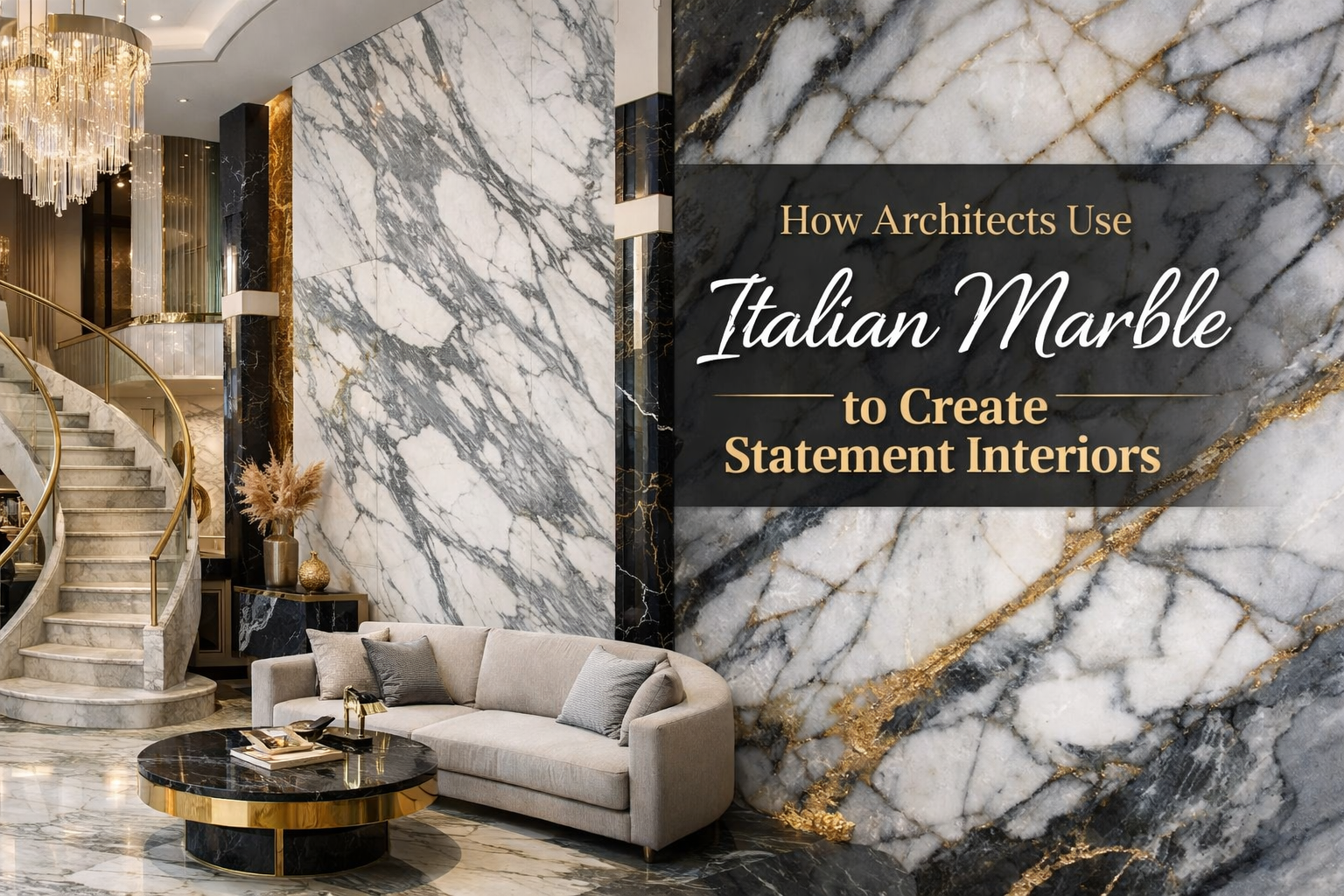
One of the most impactful ways architects use marble is through feature walls. These walls act as focal points in living rooms, lobbies, or reception areas.
A popular technique is book-matching, where two adjacent slabs are placed in a mirrored pattern to create a symmetrical design. This creates a dramatic visual effect that enhances the overall space.
Large-format Premium Italian marble slabs are ideal for such applications because they allow uninterrupted patterns and minimal joints, making the design more cohesive and luxurious.
5. Flooring that Defines the Space
Flooring is one of the most important elements in interior design. It sets the tone for the entire space and influences how other design elements are perceived.
Italian marble flooring offers:
- Seamless and elegant surfaces
- Long-lasting shine
- Compatibility with various interior styles
- Ability to enhance natural lighting
In statement interiors, architects often use large slabs or custom patterns to create a unique flooring layout that becomes a defining feature of the space.
6. Sculptural Staircases and Architectural Elements
Staircases are no longer just functional components—they are design statements. Architects use marble to create visually striking staircases that enhance the overall architecture.
Italian marble is also used in:
- Columns and pillars
- Decorative panels
- Fireplace surrounds
- Custom furniture elements
Its ability to be precisely cut and shaped makes it suitable for complex architectural designs.
7. Bathrooms and Spa-Like Luxury Spaces
Modern luxury interiors often include bathrooms that resemble spa environments. Italian marble is widely used to create these calming and elegant spaces.
Applications include:
- Wall cladding
- Countertops and vanities
- Bathtub surrounds
- Shower enclosures
The natural patterns and polished finish of marble create a relaxing atmosphere, elevating everyday living experiences.
8. Combining Marble with Other Materials
Architects often combine marble with materials like wood, glass, and metal to create contrast and depth.
For example:
- Marble flooring with wooden furniture
- Marble walls paired with glass partitions
- Marble countertops combined with metal fixtures
This combination enhances the overall design while maintaining balance between different textures.
9. Execution Efficiency for Large Projects
In large-scale residential and commercial projects, execution efficiency is critical. Architects prefer materials that offer consistency and flexibility during installation.
Many professionals choose Italian marble for builders because it allows:
- Precise customization
- On-site finishing adjustments
- Consistent visual outcomes
- High-quality final presentation
These factors make marble a reliable choice for both small and large projects.
10. Choosing the Right Marble Partner
The quality of marble used in statement interiors depends largely on the supplier. Selecting a reliable partner ensures consistency, authenticity, and proper guidance during the selection process.
Working with the Best marble company in India provides:
- Access to premium-quality marble
- Expert advice on slab selection
- Consistent supply for large projects
- Assurance of proper grading and finishing
A trusted supplier helps architects bring their design vision to life without compromising on quality.
11. Conclusion
Italian marble continues to be a defining element in statement interiors due to its timeless elegance and versatility. From feature walls and flooring to staircases and luxury bathrooms, it allows architects to create spaces that are both visually stunning and functionally superior.
As design trends evolve, the demand for unique and impactful interiors will continue to grow. Italian marble, with its natural beauty and adaptability, will remain at the forefront of architectural innovation.
12. FAQs
Q1. What are statement interiors in architecture?
Statement interiors are spaces designed to stand out through unique materials, patterns, and design elements.
Q2. Why do architects prefer Italian marble for feature walls?
Because of its natural patterns and ability to create dramatic visual effects.
Q3. Can Italian marble be used in modern interior designs?
Yes, it complements both modern and traditional design styles.
Q4. Is Italian marble suitable for large projects?
Absolutely. It offers consistency and flexibility, making it ideal for large-scale developments.
Q5. How important is supplier selection for marble projects?
A reliable supplier ensures quality, consistency, and proper guidance throughout the project.

Why Italian Marble is the Preferred Choice for Premium Villa Projects
The Role of Italian Marble in Modern High-Rise Residential Projects