
Author’s Note:
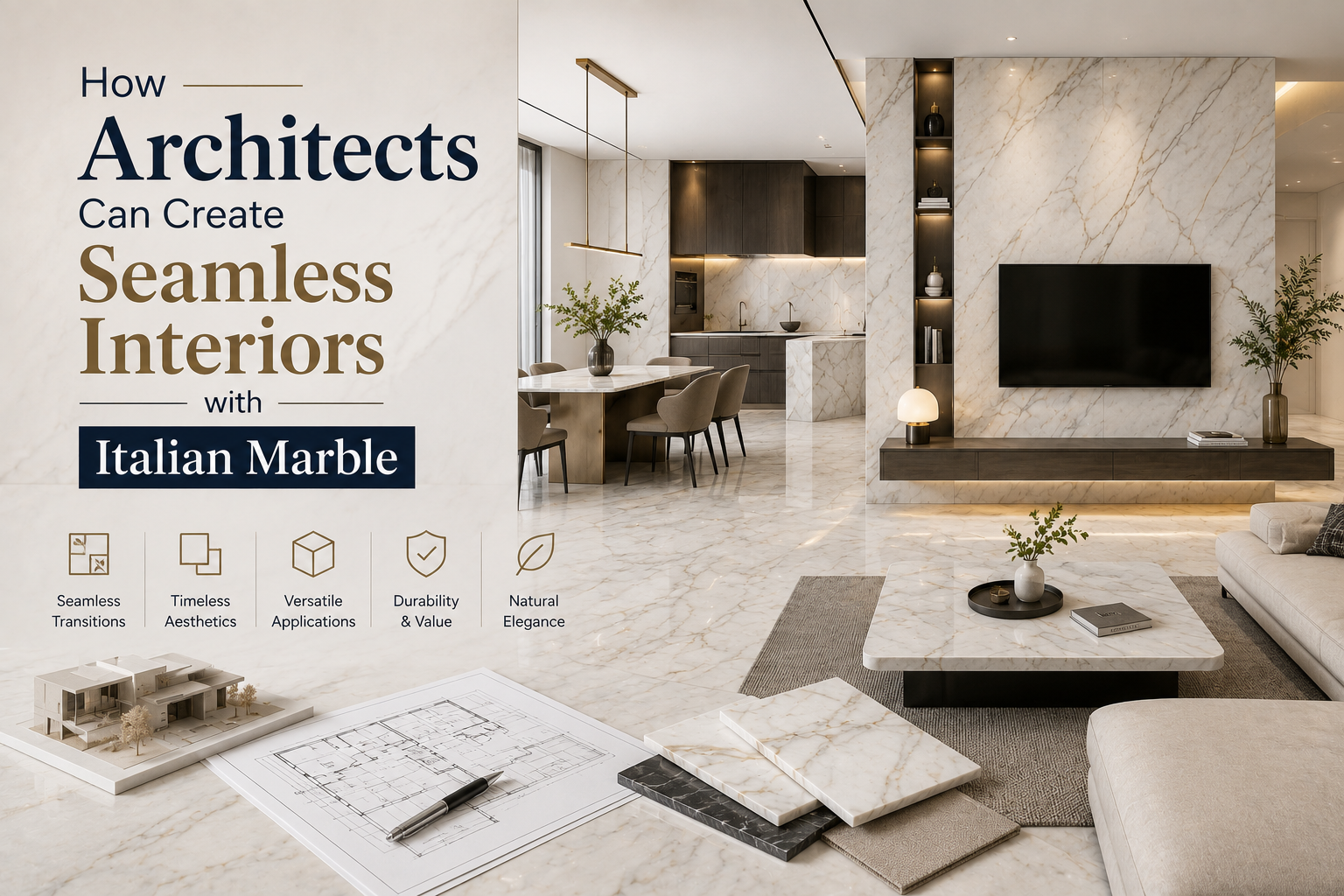
Seamless interiors have become an important feature of modern luxury architecture. Architects increasingly focus on visual continuity, minimal joints, balanced material transitions, and carefully coordinated surfaces to create spaces that feel larger and more refined. Italian marble is particularly effective for this approach because of its natural veining, sophisticated appearance, and availability in large slab formats. This article explains how architects can use Italian marble strategically to achieve seamless and visually cohesive interiors in premium residential and commercial projects.
Table of Contents
- Introduction
- Planning for Visual Continuity
- Creating Seamless Marble Applications
- Combining Marble with Other Materials
- Conclusion
- FAQs
Introduction
Modern luxury interiors are increasingly moving toward clean, uninterrupted surfaces. Instead of filling spaces with numerous decorative elements, architects are focusing on proportion, material continuity, natural textures, and carefully selected finishes.
Italian marble is an excellent material for achieving this design philosophy. Its natural patterns provide visual movement, while large slabs allow designers to cover extensive surfaces with fewer joints. When selected and installed correctly, marble can make floors, walls, bathrooms, and feature areas appear connected rather than visually fragmented.
The growing demand for Imported Italian marble reflects the preference for natural materials that combine sophistication with architectural flexibility. From luxury villas to premium apartments and hospitality spaces, architects are using marble to create interiors that feel spacious, polished, and timeless.
Planning for Visual Continuity
A seamless interior begins at the design stage. Architects should decide where marble will be used before construction begins so that slab dimensions, vein direction, lighting, and surrounding materials can be coordinated properly.
One of the most important considerations is the direction of natural veining. Instead of selecting slabs individually, designers can study multiple slabs together and determine how their patterns can flow from one surface to another.
This is particularly useful for:
- Large living rooms
- Double-height walls
- Entrance lobbies
- Staircases
- Luxury bathrooms
- Dining areas
Neutral marble varieties can be especially effective in contemporary interiors. Italian grey marble in India is increasingly used for modern projects because its subtle tones create continuity while complementing wood, glass, metal, and neutral furniture.
Architects should also consider lighting during the selection process. Natural and artificial light can significantly affect how marble colors and veining appear. Viewing slabs under lighting conditions similar to the completed space can help prevent unexpected differences after installation.
Creating Seamless Marble Applications
Large-format slabs are one of the most effective ways to achieve a seamless appearance. Premium Italian marble slabs can be used across expansive surfaces to reduce the number of joints and create uninterrupted visual patterns.
Flooring
Large marble flooring can make a room appear wider and more open. Consistent slab selection and careful alignment help maintain a continuous visual flow from one area to another.
In open-plan homes, the same or complementary marble can extend from the entrance into the living and dining areas. This approach visually connects different functional zones without requiring physical partitions.
Feature Walls
Feature walls offer an opportunity to showcase the natural character of marble.
Book-matching techniques can arrange adjacent slabs so that their veins mirror each other. This creates a symmetrical pattern that can become the primary artistic feature of a room.
This method works particularly well behind:
- Television units
- Reception desks
- Fireplaces
- Beds
- Dining areas
Bathrooms
Bathrooms benefit significantly from coordinated marble applications. Using the same marble across walls, vanity areas, and selected flooring can create a sophisticated spa-like environment.
However, architects should select suitable surface finishes based on the specific application and safety requirements.
Combining Marble with Other Materials
A seamless interior does not necessarily mean using marble everywhere. In fact, combining marble with carefully selected materials can create a more balanced and sophisticated result.
Wood introduces warmth and prevents marble-heavy interiors from feeling cold. Glass can enhance openness and allow light to move through the space, while metal details can introduce subtle contemporary contrast.
Architects should maintain a controlled material palette rather than combining too many competing finishes.
Many developers and professionals choose Italian marble for builders because its versatility allows it to work effectively across different architectural concepts and applications.
Procurement is another important consideration. Large projects may require significant quantities of marble, making consistency in color, veining, thickness, and finish essential.
Partnering with the Best marble company in India can help project teams with material selection, slab coordination, quality inspection, inventory planning, and timely delivery.
For multi-phase developments, advance procurement planning is particularly important. It helps architects maintain a consistent design language even when different areas of the project are completed months apart.
Conclusion
Creating seamless interiors with Italian marble requires more than choosing an attractive stone. It involves careful planning, slab selection, vein coordination, lighting analysis, installation precision, and thoughtful integration with surrounding materials.
Large-format slabs, book-matched patterns, coordinated flooring, and carefully designed feature walls can transform marble into a continuous architectural element rather than simply a decorative surface.
For architects working on premium residences, hotels, offices, and luxury developments, Italian marble offers the flexibility and natural character required to create interiors that feel sophisticated, spacious, and timeless.
With the right design strategy and reliable material sourcing, marble can become one of the defining elements of a seamless luxury interior.
FAQs
1. How can architects create a seamless look with Italian marble?
Architects can use large-format slabs, consistent material selection, aligned joints, coordinated veining, and carefully planned layouts to create visual continuity.
2. What is book-matching in marble installation?
Book-matching involves placing adjacent marble slabs so their natural veining mirrors or complements each other, creating a symmetrical visual pattern.
3. Are large marble slabs better for seamless interiors?
Large slabs can significantly reduce visible joints and create more continuous surfaces, making them particularly effective for luxury architectural designs.
4. Can Italian marble be combined with wood and glass?
Yes. Marble works exceptionally well with wood, glass, metal, and other natural materials when the overall color and texture palette is carefully coordinated.
5. Why is supplier selection important for large marble projects?
A reliable supplier can help maintain consistency in slab quality, color, veining, dimensions, and availability, which is essential for achieving a cohesive final design.
Why Italian Marble Is Becoming a Standard for Premium Residential Projects
Italian Marble Selection Guide for Luxury Apartments and Penthouses