Table of Contents
- Introduction
- Understanding Marble Finishes
- What Is Polished Marble?
- What Is Honed Marble?
- Polished vs Honed Marble: Key Differences
- Best Applications for Polished Marble
- Best Applications for Honed Marble
- Choosing the Right Finish for Luxury Projects
- Selecting the Right Marble Supplier
- Conclusion
- FAQs
1. Introduction
Marble is a timeless material that elevates interiors with elegance, durability, and natural beauty. However, the overall look and performance of marble depend heavily on its surface finish. Among the various options available, polished and honed marble are the two most popular finishes used in residential and commercial spaces.
Choosing between polished and honed marble is not just a design decision—it also affects maintenance, safety, and long-term usability. Understanding the differences between these finishes helps homeowners, architects, and designers select the right option for their specific space.
2. Understanding Marble Finishes
A marble finish refers to the final surface treatment applied to the stone after cutting and processing. This treatment determines how the marble looks, feels, and performs in daily use.
The two most commonly used finishes are:
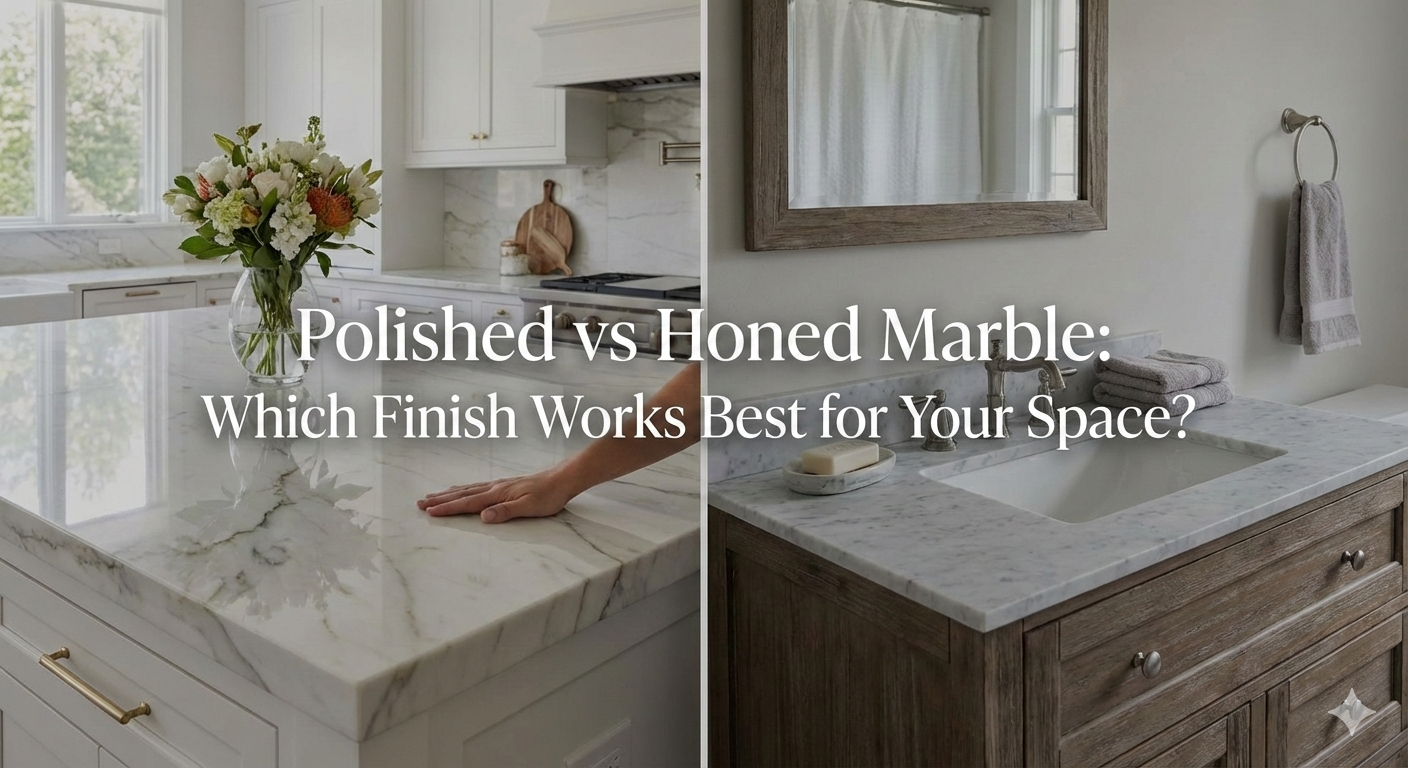
- Polished finish: Smooth, glossy, and reflective
- Honed finish: Smooth but matte, with little to no shine
Each finish offers distinct aesthetic and functional advantages, making them suitable for different applications.
3. What Is Polished Marble?
Polished marble undergoes extensive grinding and buffing to achieve a high-gloss, mirror-like surface. This process enhances the stone’s natural color and veining, making it visually striking.
Key characteristics of polished marble:
- Highly reflective surface
- Rich color depth and clarity
- Elegant and luxurious appearance
- Easy to clean due to low surface porosity
Premium stones such as Statuario marble in India are often polished to highlight their dramatic veining and bright white background, making them ideal for statement interiors.
4. What Is Honed Marble?
Honed marble is ground to a smooth but non-glossy finish. It has a soft, velvety appearance that feels natural and understated.
Key characteristics of honed marble:
- Matte or satin-like surface
- Minimal light reflection
- Subtle and contemporary look
- Better slip resistance compared to polished marble
This finish is especially popular in modern and minimalist design styles where a calm, natural aesthetic is preferred.
5. Polished vs Honed Marble: Key Differences
Understanding the differences between polished and honed marble helps in making an informed decision.
| Feature | Polished Marble | Honed Marble |
|---|---|---|
| Surface Look | Glossy and reflective | Matte and smooth |
| Color Appearance | Enhanced and vibrant | Soft and natural |
| Slip Resistance | Lower | Higher |
| Maintenance | Shows scratches easily | Shows stains more |
| Design Style | Classic and luxurious | Modern and understated |
Both finishes are durable, but their performance varies depending on usage and location.
6. Best Applications for Polished Marble
Polished marble is best suited for areas where visual impact is a priority and foot traffic is controlled.
Ideal applications include:
- Living rooms
- Reception areas
- Feature walls
- Hotel lobbies
- Decorative flooring
For instance, Michelangelo marble in India is frequently used with a polished finish in luxury spaces to create a refined and artistic focal point.
Polished marble works exceptionally well in spaces with ample lighting, as it reflects light and enhances the sense of openness.
7. Best Applications for Honed Marble
Honed marble is preferred in spaces where safety, comfort, and subtle elegance are essential.
Ideal applications include:
- Bathrooms and shower areas
- Kitchens
- Hallways and corridors
- Offices and commercial spaces
- High-traffic flooring
Stones like Italian grey marble in India are often honed to achieve a sophisticated, professional look that complements modern interiors while offering better slip resistance.
8. Choosing the Right Finish for Luxury Projects
When selecting a marble finish for luxury residential or commercial projects, several factors must be considered:
- Foot traffic: High-traffic areas benefit from honed finishes
- Lighting: Polished marble enhances brightness in well-lit spaces
- Maintenance preferences: Honed marble hides scratches better, while polished marble is easier to wipe clean
- Design intent: Bold luxury vs subtle elegance
In large-scale projects, the guidance of the Best imported marble supplier in India can help match the right finish with the appropriate marble variety and application.
9. Selecting the Right Marble Supplier
The quality of the finish largely depends on processing standards and material authenticity. A reliable supplier ensures:
- Proper surface treatment
- Consistent finish across slabs
- Expert advice on application and maintenance
Working with the Best marble company in India ensures access to premium-quality marble, professional processing, and long-term performance—especially important for high-value spaces.
10. Conclusion
Both polished and honed marble finishes offer unique advantages, and neither is universally better than the other. The right choice depends on how and where the marble will be used.
Polished marble delivers timeless luxury and visual brilliance, while honed marble offers modern elegance with practical benefits. By understanding your space, lifestyle, and design goals, you can confidently choose the finish that enhances both beauty and functionality.
11. FAQs
Q1. Which marble finish is better for flooring?
Honed marble is generally better for flooring in high-traffic or wet areas due to better slip resistance.
Q2. Does polished marble scratch easily?
Polished marble can show scratches more clearly, but proper care and maintenance minimize this issue.
Q3. Is honed marble harder to maintain?
Honed marble may show stains more easily, but it hides scratches and etching better than polished marble.
Q4. Can the finish of marble be changed later?
Yes, marble can be re-polished or honed by professionals if needed.
Q5. Which finish is best for luxury interiors?
Both finishes work well—polished for classic luxury and honed for contemporary, understated elegance.

How to Select Marble Slabs for High-End Commercial Projects
X-Series 2026: Why Italian Marble Remains the Top Specification for Luxury Developments